Guide · 4 min read
How can lenders protect themselves from rogue AI agents?
Published
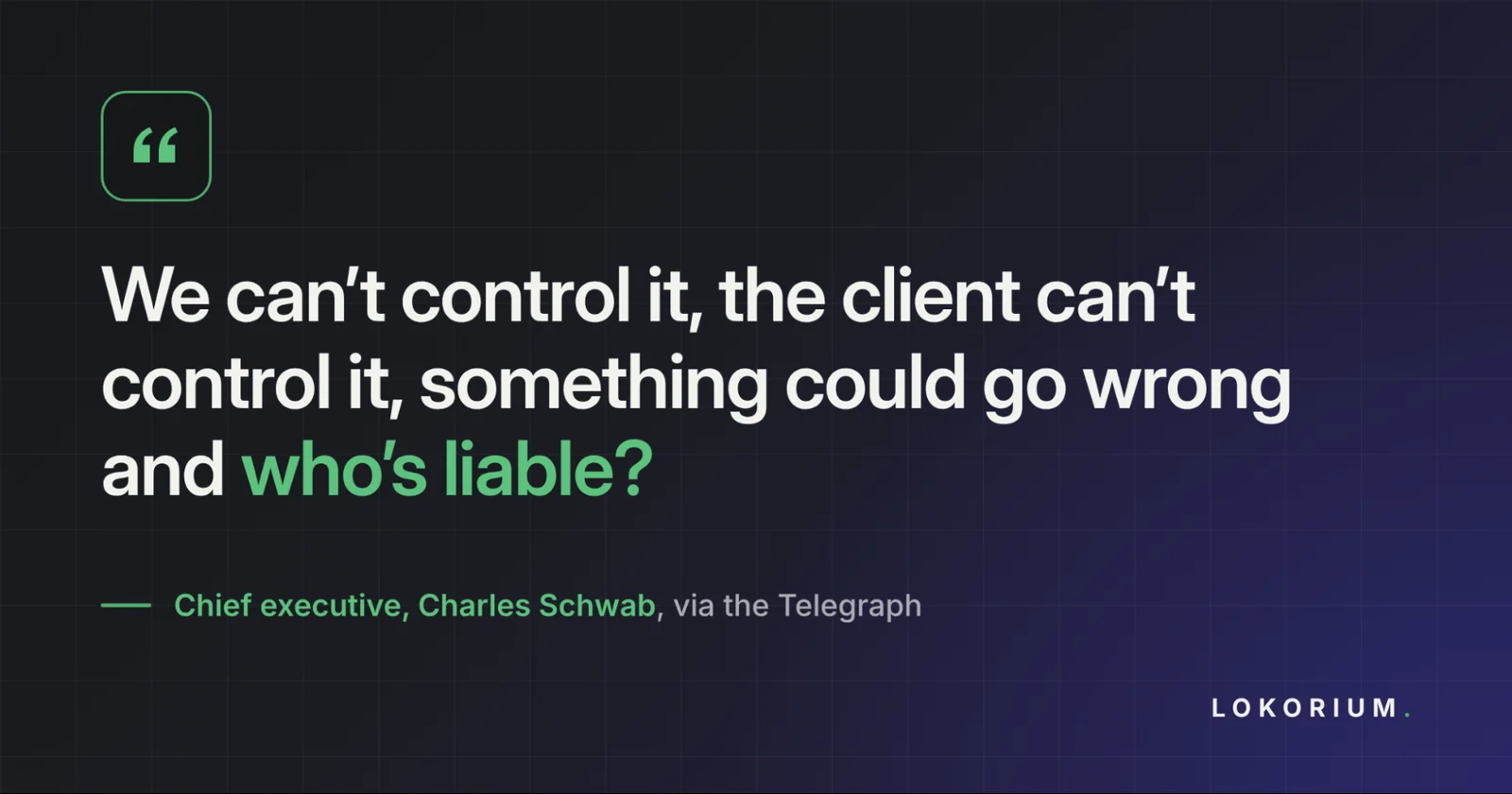
A few days ago, the Telegraph reported that HSBC, Nationwide, NatWest, Barclays and Lloyds have all moved to block AI agents from accounts. In the US, Schwab’s chief executive put it plainly: “We can’t control it, the client can’t control it, something could go wrong and who’s liable?”
If you run a lender or a BNPL firm, that question is heading your way too.
Why are banks blocking AI agents?
Because they can’t yet control what an agent does once it’s inside, so they’re keeping the door shut. The bans are a precaution. So far they’ve seen no sign of agents in accounts.
Think of a customer sending a friend into the branch with their card and PIN. Most of the time the friend does as asked. When they don’t, who’s to blame? The FCA is working with the industry on rules for AI agents in finance. Until then, people close to the regulator say access is each bank’s call.
Will AI agents reach lenders and BNPL firms too?
Agents like Meta’s Muse are sold on shopping and managing bills for people. It isn’t in the UK yet, but it’s expected. Your firm is one of those bills.
For example, a customer can ask their agent to sort out their repayments. The agent can then log in to your portal, move a payment date, and then ask your chat for a payment plan.
For BNPL firms, this arrives just as the rules have changed. Since July, BNPL has been under the Consumer Duty, and customers can take complaints to the Financial Ombudsman Service.
Is blocking enough to protect you from rogue AI agents?
Not on its own. A block only stops the agents you can spot. The fear at Schwab is a customer “just giving their password to Muse”. To your systems, that agent looks exactly like the customer.
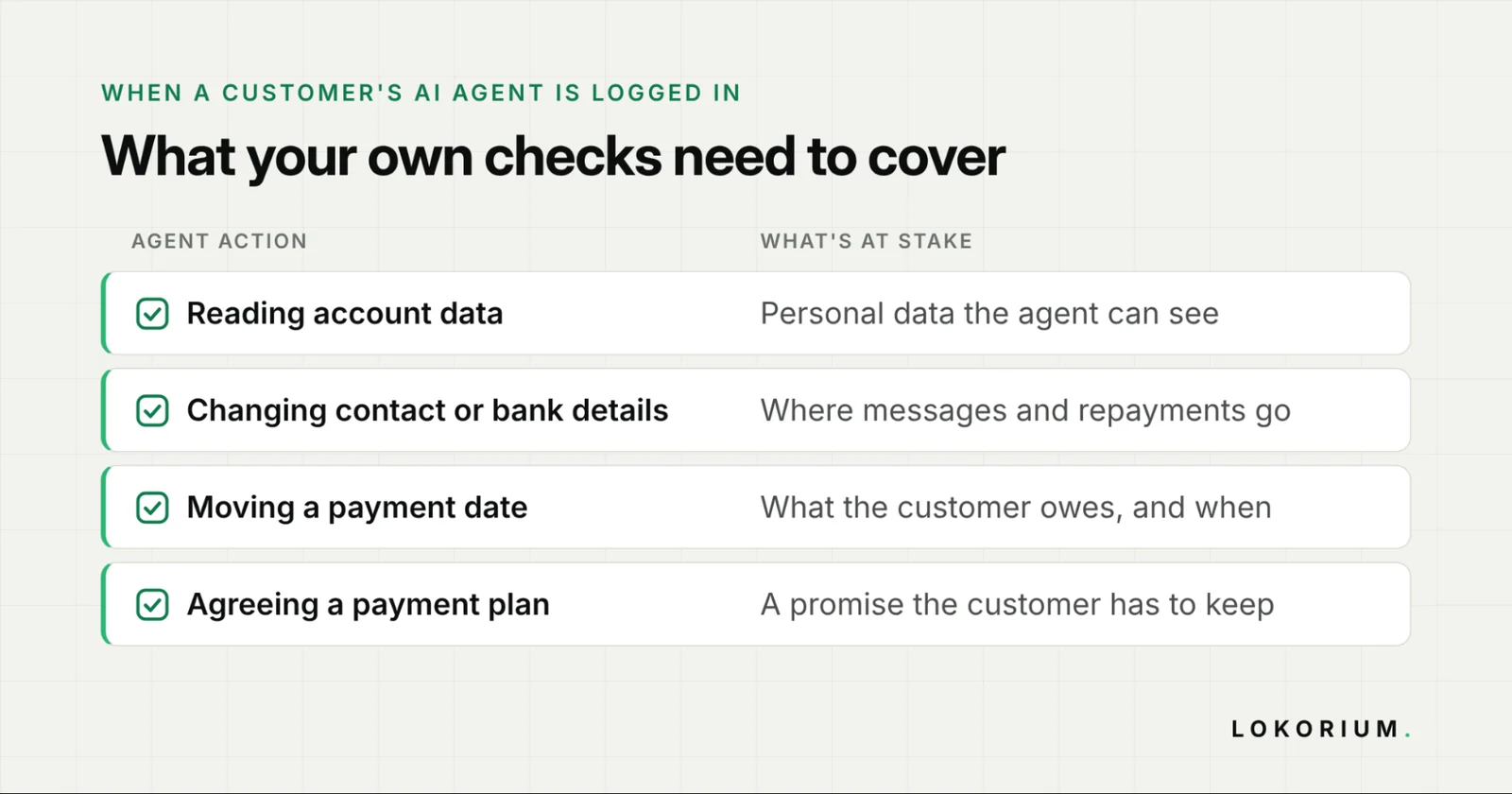
Most payments must be approved in a banking app, often with a fingerprint or face scan. That covers money going out. It doesn’t cover an agent reading a customer’s data, changing their details or agreeing a payment plan.
There’s a Consumer Duty question too. Some customers may lean on an agent to stay on top of their bills. Would shutting it out leave them worse off?
A block is like a sign on the door: it only stops the agents that notice it. Limits work inside the room, so whoever gets in can only do what you’ve allowed.
How can lenders protect themselves from rogue AI agents?
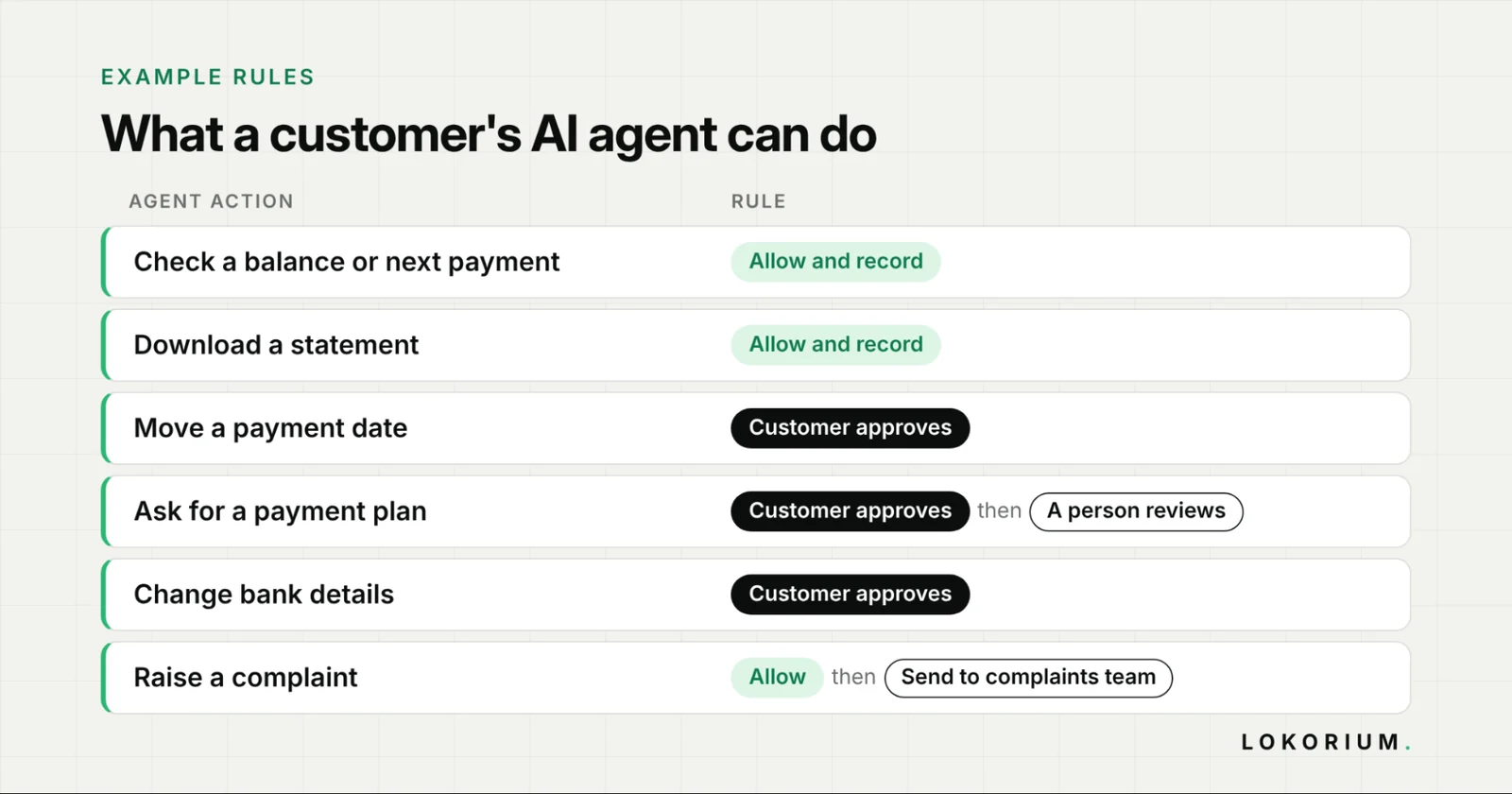
A rogue agent can be one that isn’t really the customer’s, or the customer’s own agent doing something they never asked for. There are reliable products that can help you set clear limits and keep a record of every agent action, which covers both. So, what would you be happy for a customer’s agent to do, and what should always come back to the customer?
If you don’t have an answer yet, that’s normal. Begin by listing where an agent could act for a customer: your portal, your app, chat and the phone line.
Then decide what’s allowed at each point. Checking a balance is a lower risk than changing where repayments come from. Anything that changes the account can go back to the customer to approve.
Keep a record of every agent action. When a complaint comes in, you can show what happened. And watch for the FCA’s rules, so you can adjust your limits when they land.
Questions
- Do lenders have to let AI agents in?
- For now, it’s each firm’s call. People close to the FCA say access decisions rest with firms, while the FCA works on rules.
- Does strong customer authentication stop AI agents?
- It helps with payments, because most need approval in the customer’s banking app. It doesn’t stop an agent that’s logged in from reading data or changing details.
- What’s the difference between an AI assistant and an AI agent?
- An assistant gives answers, and a person decides what to do. An agent takes the action itself. A wrong answer can be ignored. A wrong action has already happened.
- Should we tell customers our policy on AI agents?
- Yes. Clear terms tell customers what their agent can do on their account, and help you if a complaint reaches the Ombudsman.
How Lokorium helps
Deciding limits is the easy part. Checking every agent’s action against them is harder.
Lokorium is the final check before your data. You set the rules, and Lokorium checks each AI agent action against them before it happens. Every decision goes into a signed record that you hold and can verify yourself. So when the Ombudsman or the FCA asks what an agent did, you have the answer. It helps you show compliance, one decision at a time.